Buyer Closing Costs CalculatorSeller Closing Costs CalculatorRealtor Commission CalculatorRent Vs. Buy Calculator
Discount Realtor®Cashback Realtor®Buyer Agent

Contact Us

2 Sheppard Avenue East, Unit: 20th Floor Toronto, ON M2N 5Y7 Canada

+1 (647) 228-0115

[email protected]

Support

  • Contact Us
  • Sitemap
  • Blog

Company

  • About PropertyMesh
  • Editorial Policy
  • Disclaimer
FacebookTwitterInstagramLinkedinYoutube
PropertyMesh

© 2026 All rights reserved. All registered trademarks herein are the property of their respective owners. PropertyMesh is owned by Faiza Ahmed Realty Corp. (RECO Registration #4791581) and operates under INTERNATIONAL REALTY FIRM, INC., Brokerage (RECO Registration #4799095).

Head Office: 2 Sheppard Avenue East Unit: 20th Floor Toronto, ON M2N 5Y7 Canada.

Privacy Policy·Terms & Conditions·

Data & Service Disclaimer:
Website Listings: PropertyMesh.ca provides access to live resale listings via IDX (Internet Data Exchange) and VOW (Virtual Office Website) feeds. This information is provided for consumers' personal, non-commercial use and may not be used for any purpose other than to identify prospective properties consumers may be interested in purchasing. Information is deemed reliable but is not guaranteed and should be independently verified.

Trademark & Licensing Notices: The trademarks MLS®, Multiple Listing Service®, REALTOR®, and associated logos are controlled by The Canadian Real Estate Association (CREA) and identify professional real estate services provided by members of CREA. All other trademarks are the property of their respective owners.

    Back to Blog

    Pros and Cons of Buying a Condo

    Condos can offer a lower entry price and low-maintenance living, but fees, rules and building-specific resale risks are real trade-offs. Weigh both sides before buying.

    FA

    Written by Faiza Ahmed

    Last updated on August 14, 2026

    Pros and Cons of Buying a Condo
    On This Page
    Share on XShare on FacebookShare on LinkedInShare on Reddit
    Share on XShare on FacebookShare on LinkedInShare on Reddit

    Related Articles

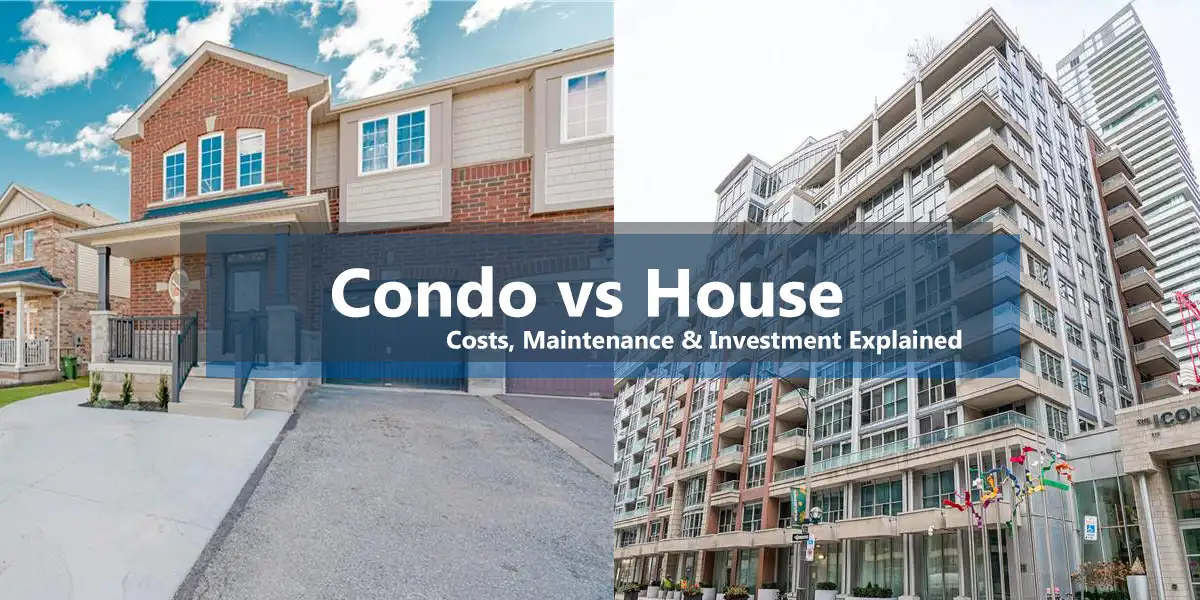
    Condo vs House: Costs, Maintenance & Investment Explained

    Condo vs House: Costs, Maintenance & Investment Explained

    14 min read

    Do You Need a Real Estate Agent to Buy a Home in Canada

    Do You Need a Real Estate Agent to Buy a Home in Canada

    8 min read

    How to Pick a Real Estate Agent in Canada

    How to Pick a Real Estate Agent in Canada

    10 min read

    Thinking about buying a condo? You’re not alone. Across Canada’s biggest cities, condo living is common, but is it the right fit for you?

    A Condo Might Be a Good Choice If You:

    ✔️ Prefer a lower upfront cost compared to a house

    ✔️ Want access to amenities while sharing responsibility for their maintenance

    ✔️ Like the idea of living in a secure, well-located building

    ✔️ Are looking for a real estate investment with rental potential

    A Condo Might Not Be Ideal If You:

    ❌ Want complete freedom to reconstruct, renovate or modify your home

    ❌ Prefer having a private yard and more living space

    ❌ Are worried about rising condo fees and special assessments

    ❌ Are concerned about market risks specific to condos, such as oversupply from new construction

    The Advantages of Buying a Condo

    Lower Cost Compared to Single-Family Homes

    The most tempting aspect of a condo is the price for many buyers because in cities like Toronto and Vancouver, condo apartments often have a lower purchase price than detached homes. Prices vary depending on location and amenities, and when the purchase price is lower, the dollar down payment may also be lower. The mortgage down-payment rules themselves depend on price and financing eligibility, not the condo label.

    Low Maintenance and Upkeep

    When you own a house, it has responsibilities like mowing the lawn, shoveling snow, and handling major repairs. But when it comes to living in a condo, the governing organization is generally responsible for managing and maintaining common property. The exact division depends on provincial or territorial law, unit boundaries, the declaration or strata plan, and the governing documents.

    However, the individual condo owner is typically responsible for maintenance and major repairs inside their unit, such as appliances, plumbing fixtures, flooring, and electrical issues within the unit’s boundaries. The documents for the property should confirm the actual responsibilities.

    Access to High-End Amenities

    Many condo buildings have luxury features that would otherwise be costly to maintain in a private home. These co-spaces let owners share the cost and use of amenities. Some common amenities include:

    • Fitness centres

    • Rooftop patios

    • Swimming pools

    • Party rooms

    • Concierge services

    Prime Locations with Urban Convenience

    Condos are often built in prime areas, close to transit, entertainment, shopping, and business districts. That means easier commutes and a vibrant, city-centred lifestyle.

    Better Security Features

    Security features vary by building. A condo may have key fob entry, surveillance cameras, or 24/7 concierge services. This added security can be especially appealing for those living alone or with children, but buyers should assess the actual systems and procedures.

    Rental Potential for Investors

    In high-demand cities like Toronto and Vancouver, condos can be income properties. But check the governing documents and local law, as some buildings restrict short-term rentals like Airbnb. Rental potential still depends on rent, vacancy, condo fees, financing, insurance, taxes, repairs, and resale costs.

    The Downsides of Buying a Condo

    Monthly Condo Fees Can Be Expensive

    Monthly maintenance fees are one of the biggest drawbacks. They cover shared amenities and upkeep but can rise over time and significantly impact your annual budget.

    Fees also affect financing. Federal mortgage guidance includes 50% of applicable condo fees in standard gross and total debt service calculations, even though you must budget for the full amount. Confirm the current fee with your lender and ask what it includes.

    Risk of Special Assessments

    If major repairs arise and the reserve fund is short, condo owners may face unexpected fees called special assessments. This can be a serious financial hit. To mitigate this risk, review the building’s Status Certificate in Ontario, or the current certificate and supporting records required in the property’s jurisdiction, before buying. These records provide information about reserve funding, approved assessments, and known issues, but cannot guarantee that no future cost will arise.

    Less Control Over Your Property

    Condo declarations, bylaws, rules, or their local equivalents can limit:

    • Pet ownership

    • Renovation freedom

    • Renting out your unit

    • Noise levels

    Shared Spaces and Noise Issues

    Sharing walls, hallways, and elevators means less privacy. Even with noise rules, neighbour disruptions can happen.

    Market Volatility and Resale Challenges

    Condo performance relative to detached homes isn’t a universal rule. In hyper-dense urban cores like those in Toronto and Vancouver, condos can experience periods of very rapid appreciation, sometimes outpacing the broader local market. However, the condo market can be sensitive to supply. During economic downturns, a wave of newly constructed units can create intense competition, making older condos harder to sell and potentially suppressing values.

    In places like Toronto and Vancouver, rapid condo construction has led to oversupply concerns, which can drag down resale values. Review recent comparable sales, current inventory, upcoming completions, building condition, fees, and unit features rather than relying on a Canada-wide appreciation claim.

    What is the Governing Organization and Board?

    When you buy a condo, you’re not just buying your unit; you’re buying into a legal and document framework that varies across Canada. Ontario uses a condominium corporation and board, British Columbia uses a strata corporation and council, and Quebec uses a syndicate of co-owners.

    Think of it as shared ownership and governance, not a company in which all owners are shareholders. Owners are members or co-owners under the applicable law. The governing organization manages the common property for their collective benefit, while ownership of the shared property depends on the local framework.

    • The governing organization manages and maintains the common elements, such as the lobby, roof, and pool, subject to local law and the governing documents.

    • The board or council is a group of individuals, often owners and volunteers, generally elected by owners to run the organization. They make the daily decisions, from setting the budget and hiring a property manager to administering the rules you have to live by.

    Understanding this is key: when you have a problem, you may be dealing with a board or council of your neighbours, and everyone is bound by the applicable governing documents.

    Final Words

    Buying a condo in Canada involves clear trade-offs. It offers affordability and convenience, but it also comes with ongoing fees and restrictions. If you’re seriously considering a condo, it’s crucial to research the governing organization. An important step is to have your lawyer or Quebec notary review the current certificate and supporting records required in the property’s jurisdiction.

    This document package is essential for due diligence, but the records and contents vary by jurisdiction. Selected examples include an Ontario Status Certificate, a British Columbia Form B, an Alberta or Saskatchewan estoppel certificate, and Quebec’s certificate from the syndicate of co-owners. These are not identical documents. This, combined with reviewing long-term market trends, will help you make an informed decision.
    Pro-Tip: Your Most Important Documents

    The article mentions the certificate and supporting records, and we’re mentioning them again because they’re that important.

    This document package is your X-ray into the building’s health. Your lawyer or Quebec notary will review it, but you should look at it too. The records can include:

    • The Financials: The reserve or contingency fund, annual budget, and whether the unit is in arrears on its fees, plus approved special assessments or levies and available engineering or depreciation material.

    • The Rules: The declaration, bylaws, rules, or local equivalents you must follow. This is where you’ll find the official policy on pets, balcony BBQs, rentals, and renovation restrictions.

    • The People and Property: Details on pending lawsuits or other proceedings, meeting minutes, major planned work, and the responsibilities assigned to owners and the governing organization.

    • The Insurance: The corporation, strata, or syndicate policy, major deductibles, the standard-unit or strata-lot boundaries, and the owner's need for contents, improvements, liability, additional living expenses, or deductible coverage.

    No certificate can predict every future repair or assessment. Its value is that it gives your legal adviser, lender, insurer, and you a better basis for evaluating the shared financial and governance risks before you commit.

    FA

    About the author:

    Faiza Ahmed

    As the founder of PropertyMesh, Faiza Ahmed is dedicated to making real estate more transparent and cost-effective. While she advocates for more transparent, flexible fee structures so sellers can keep more of their equity, her core focus is empowering buyers and sellers to make informed decisions. Faiza is a licensed real estate broker registered with the Real Estate Council of Ontario (RECO Registration #4791581) and an active member of the Toronto Regional Real Estate Board (TRREB).

    Follow the expert:LinkedIn