Buyer Closing Costs CalculatorSeller Closing Costs CalculatorRealtor Commission CalculatorRent Vs. Buy Calculator
Discount Realtor®Cashback Realtor®Buyer Agent

Contact Us

2 Sheppard Avenue East, Unit: 20th Floor Toronto, ON M2N 5Y7 Canada

+1 (647) 228-0115

[email protected]

Support

  • Contact Us
  • Sitemap
  • Blog

Company

  • About PropertyMesh
  • Editorial Policy
  • Disclaimer
FacebookTwitterInstagramLinkedinYoutube
PropertyMesh

© 2026 All rights reserved. All registered trademarks herein are the property of their respective owners. PropertyMesh is owned by Faiza Ahmed Realty Corp. (RECO Registration #4791581) and operates under INTERNATIONAL REALTY FIRM, INC., Brokerage (RECO Registration #4799095).

Head Office: 2 Sheppard Avenue East Unit: 20th Floor Toronto, ON M2N 5Y7 Canada.

Privacy Policy·Terms & Conditions·

Data & Service Disclaimer:
Website Listings: PropertyMesh.ca provides access to live resale listings via IDX (Internet Data Exchange) and VOW (Virtual Office Website) feeds. This information is provided for consumers' personal, non-commercial use and may not be used for any purpose other than to identify prospective properties consumers may be interested in purchasing. Information is deemed reliable but is not guaranteed and should be independently verified.

Trademark & Licensing Notices: The trademarks MLS®, Multiple Listing Service®, REALTOR®, and associated logos are controlled by The Canadian Real Estate Association (CREA) and identify professional real estate services provided by members of CREA. All other trademarks are the property of their respective owners.

    Back to Blog

    Is It Better to Rent or Buy a Home in Canada? A Realistic Guide (2026)

    Renting buys flexibility; buying builds equity — but the right answer depends on your market, timeline and finances. A realistic Canadian comparison.

    FA

    Written by Faiza Ahmed

    Last updated on August 14, 2026

    Is It Better to Rent or Buy a Home in Canada? A Realistic Guide (2026)
    Share on XShare on FacebookShare on LinkedInShare on Reddit
    Share on XShare on FacebookShare on LinkedInShare on Reddit

    Related Articles

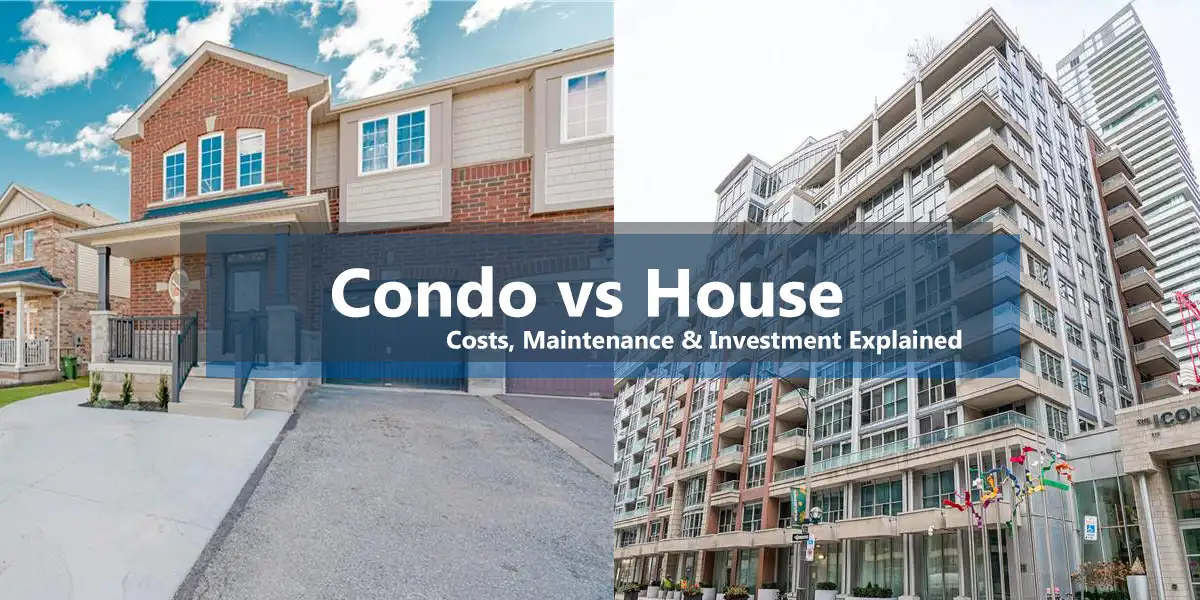
    Condo vs House: Costs, Maintenance & Investment Explained

    Condo vs House: Costs, Maintenance & Investment Explained

    14 min read

    Do You Need a Real Estate Agent to Buy a Home in Canada

    Do You Need a Real Estate Agent to Buy a Home in Canada

    8 min read

    How to Pick a Real Estate Agent in Canada

    How to Pick a Real Estate Agent in Canada

    10 min read

    When people ask, “Is it better to rent or buy a house?”, they are usually hoping for a simple financial calculation. If that is you, use our Rent vs. Buy Calculator to compare your specific scenario. But in Canada’s diverse housing market, the answer depends heavily on where you are and who you are.

    Buying a condo in Calgary involves different laws, taxes and closing costs than buying a rowhouse in Toronto or a detached home in Halifax. The math changes across provincial borders, but the core questions remain the same:

    • What kind of life do you want right now?

    • How stable is your income?

    • How do you feel about debt, repairs and risk?

    The useful comparison is not simply rent versus a mortgage payment. It is a comparison of monthly cash flow, unrecoverable housing costs, time horizon, ending net worth and the risks you would carry under each option.

    Before comparing the numbers, make sure you are comparing reasonably similar housing. Renting a one-bedroom condo and buying a detached house does not isolate the difference between renting and owning. It also measures a change in property type, space, location and lifestyle. Our condo versus house guide explains those separate trade-offs.

    On This PageTap to view
    • Regional Laws
    • Side-by-Side Comparison
    • Thinking About the Numbers
    • Why People Buy
    • Why People Rent
    • Hurdles: Renting
    • Hurdles: Owning
    • Decision Framework

    A note on provincial and territorial rules: This guide provides general educational information. Tenancy law, deposits, rent increases, property-transfer taxes, closing procedures and legal remedies vary across Canada. Ontario examples are identified as Ontario examples and should not be treated as national rules.

    For example, Ontario generally permits a rent deposit for the last rental period, but not a damage deposit, and a refundable key deposit cannot exceed the expected direct replacement cost. Quebec does not permit a landlord to demand advance rent beyond the first payment period or another amount as a deposit. British Columbia permits a security deposit of up to half of one month’s rent. These are materially different legal frameworks, not minor wording differences.

    Always consult a local real estate lawyer or mortgage broker for advice specific to your province and situation.

    Provincial differences in renting rules across Canada

    Renting vs Owning: Side-by-Side

    A neutral comparison of home ownership vs renting so you can see the trade-offs, not a “right” or “wrong” answer.

    Renting
    Owning
    Risk & stability overview
    View:
    5.1 General Renting vs Owning Comparison
    AreaRenting a HomeOwning a Home
    Upfront Money
    Renter
    Usually lower: rent deposits permitted in the jurisdiction, moving costs and setup costs.
    Owner
    Usually higher: down payment, legal costs, taxes, inspection or appraisal costs and other closing adjustments.
    Monthly Cash Flow
    Renter
    Rent, tenant insurance, utilities and any parking or service fees.
    Owner
    Mortgage payment, property taxes, insurance, utilities, maintenance and condo or strata fees where applicable.
    Equity
    Renter
    Rent does not create an ownership interest.
    Owner
    The principal portion of mortgage payments reduces debt and builds equity.
    Repairs & Maintenance
    Renter
    Major repairs are generally the landlord’s responsibility, but the tenant has less control over timing and quality.
    Owner
    The owner funds and manages repairs, with more control and more responsibility.
    Flexibility
    Renter
    Usually easier to relocate, subject to the lease and local tenancy rules.
    Owner
    Moving usually requires a sale, refinancing or becoming a landlord, all of which can take time and money.
    Control Over Space
    Renter
    Changes may require permission and the lease may limit certain uses.
    Owner
    Broader ability to renovate or customize, subject to laws, permits, title restrictions and condo or strata rules.
    Stability
    Renter
    A tenant can face landlord-driven changes or a lawful termination of the tenancy.
    Owner
    An owner has stronger control over when to move, provided the mortgage, taxes and other obligations remain affordable.
    Financial Upside/Downside
    Renter
    No direct home equity, but no direct exposure to a property-price decline or major capital repair.
    Owner
    Potential equity growth and price appreciation, together with market, leverage, repair and liquidity risk.
    Lifestyle Fit
    Renter
    Often suits shorter timelines, uncertain plans and people who value mobility.
    Owner
    Often suits longer plans, greater control and people who want a more permanent home base.
    Upfront Money
    Renter
    Usually lower: rent deposits permitted in the jurisdiction, moving costs and setup costs.
    Owner
    Usually higher: down payment, legal costs, taxes, inspection or appraisal costs and other closing adjustments.
    Monthly Cash Flow
    Renter
    Rent, tenant insurance, utilities and any parking or service fees.
    Owner
    Mortgage payment, property taxes, insurance, utilities, maintenance and condo or strata fees where applicable.
    Equity
    Renter
    Rent does not create an ownership interest.
    Owner
    The principal portion of mortgage payments reduces debt and builds equity.
    Repairs & Maintenance
    Renter
    Major repairs are generally the landlord’s responsibility, but the tenant has less control over timing and quality.
    Owner
    The owner funds and manages repairs, with more control and more responsibility.
    Flexibility
    Renter
    Usually easier to relocate, subject to the lease and local tenancy rules.
    Owner
    Moving usually requires a sale, refinancing or becoming a landlord, all of which can take time and money.
    Control Over Space
    Renter
    Changes may require permission and the lease may limit certain uses.
    Owner
    Broader ability to renovate or customize, subject to laws, permits, title restrictions and condo or strata rules.
    Stability
    Renter
    A tenant can face landlord-driven changes or a lawful termination of the tenancy.
    Owner
    An owner has stronger control over when to move, provided the mortgage, taxes and other obligations remain affordable.
    Financial Upside/Downside
    Renter
    No direct home equity, but no direct exposure to a property-price decline or major capital repair.
    Owner
    Potential equity growth and price appreciation, together with market, leverage, repair and liquidity risk.
    Lifestyle Fit
    Renter
    Often suits shorter timelines, uncertain plans and people who value mobility.
    Owner
    Often suits longer plans, greater control and people who want a more permanent home base.

    The table shows general patterns. Actual costs, protections and responsibilities depend on the property, market, province or territory, and the terms of the lease or mortgage.

    5.2 Hurdles of Renting vs Hurdles of Owning
    AreaHurdles When RentingHurdles When Owning
    Security of Tenure
    Renter
    Risk of eviction for landlord’s own use, sale, renos, or disputes. Forced moves possible.
    Owner
    Risk of default, forced sale, or foreclosure if you can’t keep up with payments or taxes.
    Legal / Process
    Renter
    Navigating LTB/tribunals for repairs or disputes; backlogs and stress.
    Owner
    Navigating permits, bylaws, code, condo rules; risk of fines or forced changes.
    Affordability Over Time
    Renter
    Rent increases, new fees, utilities added to your load.
    Owner
    Rate resets, tax increases, rising insurance, increasing maintenance costs.
    Control Over Conditions
    Renter
    Dependent on landlord for repairs, maintenance, and rule enforcement.
    Owner
    Fully responsible for condition and safety of the property.
    Mobility
    Renter
    Shorter notice needed but must secure a new place in competitive markets.
    Owner
    Selling and moving is slow and expensive; your life is more anchored.
    Worst-Case Scenario
    Renter
    Eviction, sheriff involvement, difficulty renting again.
    Owner
    Foreclosure/power of sale, major loss of equity, or being stuck with a distressed property.
    Security of Tenure
    Renter
    Risk of eviction for landlord’s own use, sale, renos, or disputes. Forced moves possible.
    Owner
    Risk of default, forced sale, or foreclosure if you can’t keep up with payments or taxes.
    Legal / Process
    Renter
    Navigating LTB/tribunals for repairs or disputes; backlogs and stress.
    Owner
    Navigating permits, bylaws, code, condo rules; risk of fines or forced changes.
    Affordability Over Time
    Renter
    Rent increases, new fees, utilities added to your load.
    Owner
    Rate resets, tax increases, rising insurance, increasing maintenance costs.
    Control Over Conditions
    Renter
    Dependent on landlord for repairs, maintenance, and rule enforcement.
    Owner
    Fully responsible for condition and safety of the property.
    Mobility
    Renter
    Shorter notice needed but must secure a new place in competitive markets.
    Owner
    Selling and moving is slow and expensive; your life is more anchored.
    Worst-Case Scenario
    Renter
    Eviction, sheriff involvement, difficulty renting again.
    Owner
    Foreclosure/power of sale, major loss of equity, or being stuck with a distressed property.

    Both sides have real risks. The question isn’t “Is renting or buying a house better?” It’s: which risk profile fits your life and comfort level right now — the renter’s risks or the owner’s risks?

    !This comparison is for general education only and does not account for your full financial, legal, or tax situation. Housing laws, eviction rules, and foreclosure processes differ by province/state and change over time. Before making decisions about renting or buying, consider speaking with a licensed mortgage professional, financial planner, and/or lawyer.

    Mortgage vs Rent: How to Think About the Numbers

    Instead of comparing only a mortgage payment with rent, look at the whole picture: monthly cash flow, unrecoverable costs, time horizon, what happens to any available savings and how much risk you are comfortable carrying.

    Numbers are essential, but they are only one part of the rent-versus-buy decision.
    1. Separate monthly cash flow from unrecoverable cost

    Monthly cash-flow affordability measures how much money must leave your household each month. These are different questions from wealth, and mixing them together can make either renting or owning appear better than it really is.

    If you own
    • The full mortgage payment, including principal and interest
    • Property taxes
    • Home insurance
    • Utilities
    • Condo or strata fees, if any
    • Parking or other property-specific charges
    • A realistic allowance for routine maintenance and future repairs
    If you rent
    • Monthly rent
    • Tenant insurance
    • Utilities you pay directly
    • Parking, storage or service fees
    • Any costs the lease lawfully assigns to you

    For affordability, the full mortgage payment matters because the full payment must be made. But that does not mean the entire payment is an unrecoverable cost.

    2. Compare unrecoverable cost and ending net worth

    Unrecoverable housing cost is money spent for housing that does not remain in an asset you own. Ending net worth asks where each path leaves you financially at the end of the chosen period.

    Unrecoverable costs
    • Owner: mortgage interest, property taxes, insurance, maintenance, condo or strata fees and transaction costs. The principal portion is different because it reduces the debt and increases equity.
    • Renter: rent, tenant insurance and other non-refundable housing charges. The renter may still retain capital that would otherwise have been used for a down payment and closing costs.
    Ending net worth
    • Owner: the home’s value, remaining mortgage balance, accumulated equity and the costs of selling.
    • Renter: the unused down-payment capital and any investments made with that capital or with monthly cash-flow savings.

    A monthly budget can tell you whether you can carry the home. It cannot, by itself, tell you which option will leave you with more wealth.

    3. Look at your time horizon

    How long you expect to stay in one place is a key part of the decision because buying and selling create transaction costs.

    Shorter holding periods
    • Ownership has less time to spread out purchase costs, selling costs and possible mortgage penalties.
    • A household that expects to move in three years is exposed to the possibility that land-transfer tax, legal costs, selling expenses and a weak market absorb much of the equity created during that period.
    Longer holding periods
    • The owner has more time to reduce principal and potentially benefit from appreciation, but a rise in value is not guaranteed.
    • A household that remains for ten years has more time to spread out those costs, but still carries renewal, repair and market risk.

    There is no fixed break-even number of years. The result depends on the price paid, rent for a comparable home, mortgage terms, appreciation, rent growth, maintenance, purchase and sale costs, and what the renter does with available capital. Our guides to <a href="https://propertymesh.ca/home-closing-costs/">home-buying closing costs</a> and <a href="https://propertymesh.ca/cost-of-selling-a-house/">the cost of selling a home</a> can help identify expenses a simple rent-versus-mortgage comparison may miss.

    4. Be explicit about what happens to the renter’s savings

    Investing the difference can materially improve the renter’s ending net worth, but it is not accurate to say renting can be financially preferable only when every monthly saving is invested.

    When renting can still make sense
    • Renting may produce a lower total cost over a short period.
    • It can preserve needed liquidity.
    • It can avoid a property-market loss.
    What to be honest about
    • When ownership costs more each month and the renter consistently spends the difference, the renter gives up a potential source of long-term wealth.
    • Ownership creates some forced saving through principal repayment; renting requires the household to decide what to do with the money it did not put into the property.

    The honest answer about what you will actually do with the difference matters more than the answer a spreadsheet assumes.

    5. Consider risk tolerance and your safety buffers

    The best choice on paper might not be the best choice for your stress levels. Risk and uncertainty carry a real emotional cost.

    Types of risk
    • Ownership risk: large, irregular repair bills; mortgage-rate changes at renewal; property-tax, insurance or condo-fee increases; a decline in the property’s value; difficulty selling when you need to move.
    • Renting risk: rent increases; being required to move under the applicable tenancy law; limited control over repairs or renovations; having to compete for another rental at an inconvenient time.
    Ask yourself
    • Do you have an emergency fund that covers several months of housing costs and essentials?
    • Could you handle a temporary job loss or income drop without immediately missing payments?
    • If you owned, could you absorb a higher payment when the mortgage term ends?
    • If you rented, could you manage a rent increase or an earlier-than-expected move?

    A slightly more expensive option may still be the right choice if it provides the stability or flexibility that better fits your life.

    !This content is for general education only and does not replace advice from a licensed mortgage professional, financial planner, or lawyer. It does not account for your full financial situation. Before making major housing decisions, consider obtaining personalized advice and reviewing local laws, tenancy rules, and lending guidelines in your area.

    Why People Choose to Buy a Home

    Before comparing rent versus buy, it helps to understand why homeownership is so emotionally loaded. People rarely buy purely because of spreadsheets.

    Financial Reasons to Buy

    Build Equity and Create Forced Savings

    With a mortgage, each payment has:

    • an interest portion, which is the cost of borrowing; and

    • a principal portion, which reduces what you owe.

    Over time, the principal portion builds equity. Renting does not give the tenant an ownership interest in the property.

    A mortgage can also act as a forced-savings mechanism because principal repayment is built into the payment. That can be useful for someone who is less likely to invest voluntarily, although interest and the other costs of ownership do not create equity.

    Benefit From Appreciation, While Accepting the Downside

    If home prices rise, the owner captures the increase in value. For many households, the home becomes their largest single asset.

    The reverse also matters. If the property falls in value, the owner absorbs the loss. A renter does not lose home equity when prices decline.

    Use Leverage

    A buyer can control an asset worth much more than the initial down payment. If the property rises in value, the gain is measured against the full property value rather than only the cash originally invested.

    Leverage also magnifies losses. A decline in the home’s value does not reduce the mortgage balance by the same amount, so a relatively modest market move can have a much larger effect on the owner’s equity.

    Gain Payment Stability During a Mortgage Term

    With a fixed-rate mortgage, the scheduled mortgage payment can remain relatively stable during the term. That can feel more predictable than rent, particularly in a unit that is not subject to a rent-increase cap.

    The stability is not permanent. Canadian mortgages normally renew before the full amortization ends, and the payment can change materially when the mortgage is renewed at a different rate.

    Reduce Housing Debt Before Retirement

    Owning a home outright by retirement can reduce the amount required for debt service when employment income stops. Owners must still budget for taxes, insurance, utilities, maintenance and any condo or strata fees.

    Some owners later sell and downsize, using part of the equity for retirement or other needs. Whether that works well depends on the sale price, the cost of the replacement home and the costs of moving.

    Use an Owner-Occupied Rental Strategy

    Some owners rent a room, basement apartment or lawful secondary suite to help offset housing costs. This can improve affordability, but it also turns the owner into a landlord and introduces tenancy, safety, insurance, tax and property-standard obligations that vary by jurisdiction.

    Federal Programs and Tax Treatment

    Several federal rules can affect the buying calculation:

    • First Home Savings Account: The FHSA provides $8,000 of participation room in the first year an eligible person opens an account, subject to the program’s rules, and a $40,000 lifetime contribution limit. Contributions are generally deductible, investment growth is sheltered and a qualifying withdrawal is not included in income.

    • Home Buyers’ Plan: An eligible participant can currently withdraw up to $60,000 from an RRSP under the HBP to buy or build a qualifying home. The amount generally must be repaid over a period of up to 15 years under the program’s rules.

    • Principal residence exemption: The exemption can reduce or eliminate a capital gain when the property qualifies and is properly designated. A sale must still be reported, and factors such as periods when the property was not the principal residence, changes in use, multiple properties or the flipped-property rules can change the tax result. It should not be described as an automatic or unlimited tax-free gain.

    These programs can improve the financial case for buying, but eligibility and tax treatment depend on the person and the property.

    Stability, Control and the Kind of Home You Need

    Security of Tenure

    An owner is not dependent on a landlord deciding to sell, move into the property or pursue another lawful reason to end a tenancy. As long as the owner can meet the mortgage, tax and other obligations, the owner generally decides when to move.

    For families, that may support continuity in schools, routines and community relationships. For others, it simply reduces the recurring question, “Where will we live next year?”

    Control Over the Space

    Owners generally have more freedom to paint, renovate, add storage, improve energy efficiency or make accessibility changes, subject to permits, bylaws, title restrictions, condo or strata rules and other legal limits.

    This control can matter when a household needs wider doors, an accessible bathroom, a separate entrance, a main-floor bedroom or another specific layout that is difficult to find in rental inventory.

    Property Type Is Not the Same as Tenure

    A yard, extra bedroom, private driveway or quiet street is not automatically an ownership benefit. A person can rent a detached house and an owner can live in a small condo.

    The real advantage is often access to the particular property and location the household wants, together with the ability to keep and modify that home over time. In some markets, certain configurations are easier to find for sale than for rent. In other markets, renting may provide access to a larger or better-located home than the household could afford to buy.

    Family, Identity and Psychological Reasons

    People may want to buy because they are planning for children, caring for parents, building a multigenerational household or settling after a relocation. Others value the sense of achievement, belonging or legacy associated with owning.

    Those motivations are real, but they should be separated from pressure. “Everyone else is buying,” “renting is throwing money away,” or “I will never get in if I do not buy now” are not substitutes for an affordability and risk analysis.

    A home can be emotionally important without being financially safe at every price.

    Why People Choose to Rent a Home

    Renting is not a consolation prize. There are rational financial, practical and personal reasons to rent rather than buy.

    Financial Reasons to Rent

    Lower Upfront Cost

    The permitted deposits and setup costs vary by province or territory, but renting usually requires substantially less upfront capital than a down payment plus purchase closing costs.

    That can allow a renter to maintain an emergency fund, pay down expensive debt, invest elsewhere or preserve capital for a business, education or another priority.

    Ontario example: Security deposits for damages are not permitted in Ontario, though a rent deposit for the last rental period (LMR) is standard.

    No Direct Responsibility for Major Capital Repairs

    A roof failure, furnace replacement or major plumbing problem is generally the landlord’s responsibility under the applicable tenancy framework, not the tenant’s capital expense.

    The trade-off is control. A renter may have limited ability to choose the timing, contractor or scope of the repair and may need to use a formal process if the landlord does not respond appropriately.

    No Separate Property-Tax or Condo-Fee Obligation in Most Leases

    Owners pay property taxes and, where applicable, condo or strata fees directly. Renters usually do not receive those bills separately, although the landlord’s costs can influence the rent charged.

    Greater Liquidity

    A down payment and accumulated home equity are not as easy to access as cash or a liquid investment. A renter can keep more capital available for emergencies, opportunities or a future purchase.

    Less Direct Exposure to One Property

    If home prices fall, the renter does not lose equity in the rental property. The renter also avoids the risk of a major capital repair on that property.

    This does not make renting risk-free. The renter remains exposed to rent changes, moving costs and the performance of whatever investments or savings are held instead.

    Lower Monthly Cash Flow in Some Markets

    In a high-price or high-interest environment, renting a reasonably comparable home may cost less each month than carrying a mortgage, property taxes, insurance, maintenance and fees.

    That difference should be measured rather than assumed. It can narrow or reverse depending on the property, down payment, mortgage terms, rent and time horizon.

    Access to a Location or Property You Could Not Buy

    A household may be able to rent in a neighbourhood, school area or building that would be unaffordable to purchase. In some markets, it may also be possible to rent a larger or newer home than the household could realistically own.

    Flexibility and Lower Responsibility

    Renting can fit people who expect a job change, school move, relationship change, immigration transition or relocation. It can also be a useful way to test a neighbourhood, commute or type of home before making a purchase.

    Tenants do not usually manage roofs, exterior walls, major mechanical systems, reserve funds or long-term capital projects. That can reduce the financial and administrative load of housing.

    Renting still involves obligations. A fixed-term lease is a contract, and ending it early may have consequences under the agreement and local law. Flexibility is relative, not absolute.

    Lifestyle and Property-Type Choices

    Renting a house can provide a yard, extra bedrooms and more privacy without a long-term mortgage. Renting a condo or purpose-built apartment may provide amenities and lower personal maintenance responsibility.

    It can also let someone try city versus suburban living, condo versus detached housing or different neighbourhoods before deciding where to settle.

    Mortgage Readiness, Life Stage and Personal Preference

    Renting may be the practical choice when someone is rebuilding credit, reducing debt, establishing income history, starting a business or dealing with uncertain earnings. Mortgage underwriting depends on the lender, loan and borrower, so no single income-history rule applies to everyone.

    It can also make sense after a separation, after selling a previous home, during a move to a new city, for a senior seeking simplicity or for a young adult establishing independence.

    Some people simply prefer not to carry a large long-term debt or devote time and money to maintaining a property. That preference does not need to be justified by a prediction that home prices will fall.

    The Hurdles of Renting

    Renting has different hurdles than owning, not necessarily fewer ones.

    Tenure Insecurity

    Depending on the province or territory and the circumstances, a tenancy may be ended for reasons such as the landlord’s or purchaser’s own use, demolition, conversion or major work requiring vacant possession. A sale does not automatically end every tenancy, and the forms, notice, compensation and available remedies vary by jurisdiction.

    From the tenant’s perspective, the practical risk is that a home can become unavailable even when the rent has been paid and the property has been treated responsibly.

    Maintenance and Enforcement

    Landlords generally have legal maintenance obligations, but a legal right does not guarantee that every repair will be completed quickly or to the tenant’s satisfaction.

    Tenants may need to document the problem, communicate in writing and use the applicable tribunal, board or court process. Forms, deadlines, evidence and procedural rules can make enforcement time-consuming and stressful.

    The tenant also has limited ability to make substantial repairs or alterations independently and may not recover money spent without proper authorization.

    Rent Increases and Affordability

    Rent-increase rules vary substantially across Canada.

    Ontario Example

    Ontario’s rent-increase guideline for 2026 is 2.1% for most units covered by the guideline. In most cases, at least 12 months must have passed since the tenant first moved in or since the last rent increase, and the landlord must give at least 90 days’ written notice using the proper form.

    A unit that was not occupied for residential purposes on or before November 15, 2018 may be exempt from the guideline. Even in an exempt unit, the landlord must generally follow the 12-month timing rule and give at least 90 days’ written notice. The end of an initial fixed term is not, by itself, the rent-increase rule.

    Alberta Example

    Alberta does not cap the amount of a lawful rent increase, but it regulates timing and notice. A landlord generally cannot increase rent until at least 365 days have passed since the tenancy began or the last increase, and rent cannot be increased during a fixed term.

    The broader lesson is that the age and legal status of a rental unit, not just the current rent, can affect future affordability.

    Screening and Information Gaps

    Landlords may request credit information, income verification, references or a guarantor, subject to the applicable laws. In a competitive market, applicants may feel pressure to disclose more information or accept terms they have not fully reviewed.

    Important promises about repairs, utilities, parking, maintenance and other costs should be recorded in the written agreement. A clause appearing in a lease is not necessarily enforceable merely because both parties signed it, but the answer depends on the jurisdiction and the clause.

    Emotional and Practical Instability

    Repeated moves can involve trucks, time off work, deposits, utility changes, new furniture and disruption to school or work routines. Some renters also feel temporary even after living in one place for years.

    These costs are difficult to place in a calculator, but they belong on the renting side of the decision.

    The Hurdles of Owning

    Owning is not “no problems.” It is a different set of responsibilities and risks.

    Upfront Financial Barriers

    Down Payment and Mortgage Insurance

    For an eligible purchase, the federal minimum down-payment structure is generally:

    • 5% of the purchase price at $500,000 or less;

    • 5% of the first $500,000 plus 10% of the portion above $500,000 for a home priced between $500,000 and less than $1.5 million; and

    • 20% for a home priced at $1.5 million or more.

    A lender may require more based on the borrower and the loan. A down payment below 20% will typically require mortgage loan insurance, which protects the lender rather than the buyer.

    Note: For the commonly cited high-ratio bands, CMHC’s published homeowner premium schedule is:

    Down Payment

    Approximate Loan-to-Value Ratio

    CMHC Premium on Total Loan Amount

    5% to 9.99%

    90.01% to 95%

    4.00%

    10% to 14.99%

    85.01% to 90%

    3.10%

    15% to 19.99%

    80.01% to 85%

    2.80%

    Additional conditions and surcharges can apply.

    Since December 15, 2024, 30-year amortizations have been available for qualifying insured, high-loan-to-value mortgages when the borrower is a first-time buyer or is purchasing a newly constructed home. The federal parameters also include occupancy and mortgage-insurance requirements, so this is not a general 30-year option for every borrower with less than 20% down.

    Closing Costs

    In addition to the down payment, buyers may need money for:

    • land-transfer or property-transfer tax, depending on the jurisdiction;

    • legal or notarial fees;

    • title insurance, where used;

    • inspection and appraisal costs;

    • adjustments for prepaid taxes, condo fees, utilities or fuel; and

    • provincial sales tax on a mortgage-insurance premium where applicable.

    These costs vary enough that a percentage rule should be treated as a planning estimate, not a Canadian standard. Review the likely items in our guide to home closing costs and obtain property-specific figures before removing money from your emergency reserve.

    Ontario provides an eligible first-time buyer with a land-transfer-tax refund of up to $4,000. In Toronto, an eligible first-time buyer may also qualify for a municipal land-transfer-tax rebate of up to $4,475. Toronto buyers can be liable for both the provincial and municipal taxes, but describing this simply as “double tax” can be misleading because the detailed rate structures and rebates matter.

    Mortgage Qualification and the Stress Test

    Lenders examine income, debt obligations, credit, the property and the proposed mortgage terms.

    For uninsured mortgages, OSFI’s current minimum qualifying rate for federally regulated lenders is the greater of the mortgage contract rate plus 2% or 5.25%. OSFI expects the test to apply to most newly underwritten uninsured residential mortgages. A qualifying uninsured straight switch at renewal can be exempt when the borrower changes federally regulated lenders without increasing the loan amount or amortization period. Other lenders and insured mortgages operate under their applicable rules.

    Passing a lender’s qualification test does not prove that the payment will be comfortable. It establishes that the application meets that lender’s underwriting requirements under the tested assumptions.

    Ongoing Monthly Load and Renewal Risk

    An owner must budget for more than the mortgage:

    • property taxes, which can change annually;

    • home insurance;

    • utilities;

    • routine maintenance;

    • future capital repairs; and

    • condo or strata fees and possible special assessments, where applicable.

    Variable-rate borrowers can face changes during the term, depending on the product. Fixed-rate borrowers face renewal risk when the term ends. Job loss, illness or another income change can make a previously manageable payment difficult.

    Being house poor means that so much income and cash are committed to the property that retirement saving, emergencies, family needs and ordinary life become difficult to fund. A lender’s maximum approval should not automatically become the buyer’s target budget.

    Maintenance and Major Repairs

    Owners are responsible for routine work such as yard or snow care, gutter cleaning, servicing heating and cooling systems, and dealing with ordinary wear.

    They also carry the risk of larger projects involving the roof, furnace, air conditioning, windows, foundation, sewer, plumbing, electrical system or major appliances. The cost depends on the property and the work required, so a broad dollar range can create false confidence.

    Renovations add another layer of risk: projects can go over budget, hidden conditions can appear and poor work can create insurance or resale problems.

    Market, Liquidity and Concentration Risk

    Home values can stagnate or fall. If an owner must move during a weak market, the household may have to accept a loss, delay the move, carry two homes temporarily or become a landlord sooner than planned.

    Selling can involve commissions, legal costs, mortgage penalties and moving expenses. The equity shown on paper is therefore not the same as cash available today.

    For many households, the home represents most of their net worth. That concentration can build wealth when the property performs well, but a market decline, serious property defect, insurance issue or environmental risk can have an outsized effect.

    Legal, Property and Landlord Responsibilities

    Permits, zoning, building and fire codes, condo or strata rules, easements and title restrictions can limit what an owner may do. Older properties can also contain systems or materials that affect safety, insurance, renovation cost or resale.

    If the owner rents part of the home, the household takes on a second role. Rental income may help with affordability, but non-payment, repairs, tenant damage, insurance, taxation, lawful-unit requirements and dispute procedures must be considered before relying on that income.

    Emotional and Relationship Stress

    Ownership can provide stability and pride, but it can also create disagreements over borrowing, repairs, renovations and spending. Responsibility fatigue is real when there is always another project or bill requiring attention.

    The financially stronger option is not always the emotionally easier option.
    How to Decide: Key Questions to Ask Yourself

    There is no universal best choice, only the better fit for your circumstances and priorities right now.

    1. Am I Comparing Equivalent Housing?

    Is the rental similar to the home I would buy in location, size, condition and property type? If not, identify how much of the cost difference comes from upgrading or changing the lifestyle rather than changing tenure.

    2. How Long Am I Likely to Stay?

    A shorter expected stay gives buying less time to absorb transaction costs. A longer stay may make ownership worth exploring, but there is no guaranteed break-even year.

    3. How Stable Is My Income?

    Is it steady and predictable? Could I handle a renewal increase, temporary job loss or other income interruption?

    4. Do I Have, or Can I Build, a Buffer?

    Would I still have an emergency fund after the down payment and closing? Is there room in the budget for repairs, rent increases or an unexpected move?

    5. How Do I Feel About Responsibility Versus Flexibility?

    Do I like fixing and improving things, or does that idea exhaust me? Does moving every few years sound liberating or stressful?

    6. What Matters More Right Now: Roots or Options?

    Children, schools, caregiving and community ties may make stability more important. Career changes, uncertain plans or a possible relocation may make flexibility more valuable.

    7. If I Buy, What Else Will the Home Prevent Me From Doing?

    Will I still be able to save for retirement, handle family needs and enjoy ordinary life, or will I feel house poor?

    8. If I Rent, What Will I Do With the Capital and Monthly Difference?

    Will the unused down payment remain available or invested? Will part of any monthly saving be invested, used to repay expensive debt or intentionally spent on another priority? The honest answer matters more than the answer a spreadsheet assumes.

    Visual guide: should you rent or buy a home in Canada?

    So, Is It Better to Rent or Buy a Home?

    There is no one-size-fits-all answer.

    Owning may fit better when:

    • you have stable income and an adequate buffer;

    • you plan to remain for several years;

    • you want greater control and security of tenure;

    • you value the opportunity to build equity; and

    • you are willing to carry maintenance, renewal, market and liquidity risk.

    Renting may fit better when:

    • your work or life situation is in flux;

    • you value mobility and flexibility;

    • you do not want, or cannot yet safely carry, the financial and emotional load of ownership;

    • renting a comparable home is materially less expensive; or

    • preserving capital supports a more important financial or personal goal.

    Renting trades long-term equity for flexibility and lower responsibility. Owning trades flexibility and liquidity for control, stability and potential long-term wealth.

    Once you are clear on which trade-off matters more for you right now, the decision, while still big, becomes much less confusing.

    Important: This article provides general educational information and does not replace personalized financial, mortgage, tax or legal advice. Rules and programs vary by province or territory and can change. Verify current requirements with the relevant authority and qualified professionals before making a major housing decision.

    About the Author

    Faiza Ahmed

    As the founder of PropertyMesh, Faiza Ahmed is dedicated to making real estate more transparent and cost-effective. While she advocates for more transparent, flexible fee structures so sellers can keep more of their equity, her core focus is empowering buyers and sellers to make informed decisions. Faiza is a licensed real estate broker registered with the Real Estate Council of Ontario (RECO Registration #4791581) and an active member of the Toronto Regional Real Estate Board (TRREB).

    FA

    About the author:

    Faiza Ahmed

    As the founder of PropertyMesh, Faiza Ahmed is dedicated to making real estate more transparent and cost-effective. While she advocates for more transparent, flexible fee structures so sellers can keep more of their equity, her core focus is empowering buyers and sellers to make informed decisions. Faiza is a licensed real estate broker registered with the Real Estate Council of Ontario (RECO Registration #4791581) and an active member of the Toronto Regional Real Estate Board (TRREB).

    Follow the expert:LinkedIn
    Mortgage payment structure over time, showing the principal portion generally increasing as the interest portion declines
    Mortgage payment structure over time, showing the principal portion generally increasing as the interest portion declines