Types of Houses in Canada
Detached, semi, townhouse, condo and more — a plain-language tour of Canada's main housing types and how they differ in ownership, cost and upkeep.
FA
Written by Faiza Ahmed
Last updated on August 17, 2026
Detached, semi, townhouse, condo and more — a plain-language tour of Canada's main housing types and how they differ in ownership, cost and upkeep.
Written by Faiza Ahmed
Last updated on August 17, 2026
Canada’s housing landscape is as diverse as its geography, offering a wide range of home styles to suit different lifestyles, budgets, and regional climates.
Whether you’re a first-time homebuyer, an investor, or simply exploring your options, understanding the different types of houses available in Canada can help you make informed decisions.
The labels in this guide can overlap. Detached, semi-detached, and row house describe physical structure; condominium describes a form of ownership; and bungalow, cottage, laneway house, and garden suite describe a style, use, or locally defined housing form.

Key Trends Observed (2016–2021):
While you are exploring different types of houses in Canada, it is also a good idea to know what a real estate agent can do when you are ready to purchase.
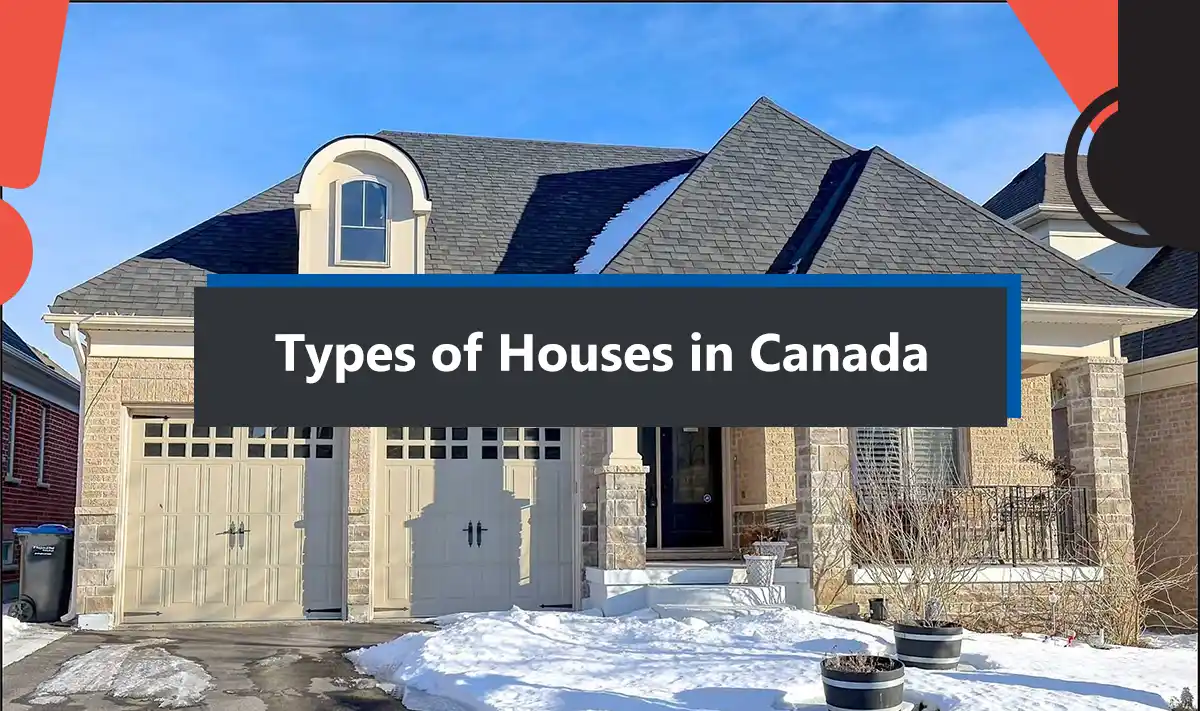
The classic detached house is the one you see in movies: a charming home with a front yard, a backyard, and no shared wall with another home. It can suit families, dog owners, and anyone who values space and privacy.

✔ Pros: More privacy, no shared wall, often more outdoor space
❌ Cons: Often higher purchase and maintenance costs than comparable attached homes, depending on the market and property
Who should live here?
✅ Families who want room to grow
✅ People who love backyard BBQs and gardening
✅ Homeowners who don’t want to hear their neighbors through the walls
A semi-detached house shares one common wall with a neighbor. It can be a middle ground between detached and denser attached options, depending on price, lot, layout, and location.

✔ Pros: May cost less than a comparable detached home, decent privacy
❌ Cons: Shared wall means you might hear your neighbors
Who should live here?
✅ First-time homebuyers looking for a balance of space and affordability
✅ Families who need a backyard but don’t mind sharing a wall
A townhouse (or row house) is one of three or more homes joined side by side. Interior units share walls on both sides, while end units usually share one. They’re common in cities where land is expensive, offering a compact but practical living space.

✔ Pros: May be more affordable than a comparable detached home, often in great locations
❌ Cons: Less privacy; condo fees, strata fees, or other shared costs may apply depending on ownership and jurisdiction
Who should live here?
✅ Young professionals who want homeownership in a compact format
✅ Families who want a mix of community and independence
✅ People who don’t need a massive backyard
Common townhouse variations you’ll see in Canada
A live/work townhouse is typically designed with a ground-floor space that can function as a small shop, studio, or office, with living space above. Some owners operate a business there; in other cases, the commercial portion may be rented out (where permitted). Location and rules matter a lot for whether the “work” space is actually useful.
✔ Pros: Mixed-use flexibility; potential rental income from the commercial portion; street-level access
❌ Cons: Zoning and condo rules can restrict permitted uses; noise/foot traffic may be higher; financing/insurance can differ
Best fit for:
✅ Owners who want a permitted storefront-style setup
✅ Buyers comfortable evaluating tenant demand and lease terms (if renting the commercial space)
✅ People prioritizing visibility and walk-in access
Quick checks before you buy: permitted uses, signage rules, parking/loading, hours of operation restrictions, and whether leasing the commercial space is allowed.
A stacked townhouse is a townhouse-style home where units are stacked vertically (one unit above another). Layouts vary, but many are two or three levels inside the unit. This format can help make efficient use of land in higher-demand areas.

✔ Pros: Often more attainable than traditional townhouses in the same area; efficient use of land supports more housing options
❌ Cons: Stairs can be a drawback (especially for some older buyers); sound transfer can vary by construction; fees may apply if it’s condo-registered
Best fit for:
✅ Younger households (or anyone comfortable with stairs)
✅ Buyers who like the townhouse feel but are okay with a denser format
✅ People prioritizing location and layout over a large yard
Quick checks before you buy: number of stairs, sound insulation, storage, outdoor space, and whether it’s freehold or condo (and what the fees actually cover).
A condominium is a form of ownership rather than one building style. A condo can be an apartment, townhouse, stacked townhouse, or another housing form. Owners hold their units and share rights and responsibilities for common property; amenities vary by development.

✔ Pros: Shared maintenance responsibilities; some developments offer urban locations and amenities
❌ Cons: Monthly condo or strata fees; rules, space, and privacy vary by development
Who should live here?
✅ Busy professionals who don’t want to mow a lawn
✅ People who love city life and being close to restaurants and nightlife
✅ First-time buyers who find a unit that fits their budget after accounting for condo fees
Want to live in one unit and rent out the others? A multi-unit property may include a duplex (2 units), triplex (3 units), or fourplex (4 units), and can support rental income or multi-generational living. Confirm the property’s zoning, existing tenancies, financing, insurance, and permitted use before relying on that plan.

✔ Pros: Rental income potential, great for multi-generational families
❌ Cons: You might have to play landlord, which requires time and property management skills
Who should live here?
✅ Investors prepared to evaluate income, expenses, and landlord responsibilities
✅ Families who want to live together but still have their own space
✅ People who don’t mind a little property management
A bungalow is primarily a one-storey home, often with a simple and open layout. It can suit people who prefer fewer stairs, although accessibility depends on the specific design.

✔ Pros: Fewer stairs; can support aging in place when the layout is accessible
❌ Cons: May have less above-grade space; layouts and basements vary
Who should live here?
✅ Buyers who prefer fewer stairs after checking their accessibility needs
✅ Small families or couples who don’t need extra floors
✅ People who love a simple, open-concept design
Ah, the cottage—a Canadian favorite! Whether it’s by a lake, in the mountains, or deep in the woods, cottages offer the perfect escape from city life.

✔ Pros: Peaceful, surrounded by nature, great for vacations
❌ Cons: Can be expensive, may lack year-round utilities
Who should live here?
✅ Nature lovers who want a retreat from the city
✅ Remote workers who dream of working from a cabin in the woods
✅ Families looking for a summer getaway
A manufactured home is factory-built, while “mobile home” may refer more narrowly to a unit designed for transport. Whether it can be relocated after installation depends on its construction, foundation, servicing, and local rules.

✔ Pros: Can offer a more attainable purchase price in some markets
❌ Cons: Financing, insurance, land ownership or lease terms, site fees, and resale conditions can differ from a conventional house
Who should live here?
✅ Buyers who have compared the home, site, financing, and land-tenure arrangement
✅ Retirees looking for a potentially lower-maintenance option
Garden suite, laneway house, and coach house are related local terms for small secondary homes built on the same property as a main house, but their definitions are not identical across Canada. These homes may be used for renting, housing elderly parents, or guest accommodations where local rules permit.

✔ Pros: Potential rental income; may add flexibility or value to the property
❌ Cons: Limited space; zoning, permits, financing, insurance, and separate-sale rights vary by location
Who should live here?
✅ Homeowners looking for extra rental income
✅ Families wanting a separate space for relatives
✅ People who love small-space living
Choosing the right type of house depends on your budget, lifestyle, and future goals. Compare the physical structure, ownership or land tenure, total monthly costs, maintenance responsibility, location, and local rules before deciding which option fits your requirements.
About the author:
Faiza Ahmed
As the founder of PropertyMesh, Faiza Ahmed is dedicated to making real estate more transparent and cost-effective. While she advocates for more transparent, flexible fee structures so sellers can keep more of their equity, her core focus is empowering buyers and sellers to make informed decisions. Faiza is a licensed real estate broker registered with the Real Estate Council of Ontario (RECO Registration #4791581) and an active member of the Toronto Regional Real Estate Board (TRREB).
| # | Structural Type of Dwelling | 2016 | 2021 | Change in Number | Change in % |
|---|---|---|---|---|---|
| 1 | Single-detached house | 7,541,495 | 7,872,305 | +330,810 | +4.4% |
| 2 | Semi-detached house | 698,795 | 746,560 | +47,765 | +6.8% |
| 3 | Row house | 891,305 | 980,110 | +88,805 | +9.9% |
| 4 | Apartment or flat in a duplex | 784,300 | 821,495 | +37,195 | +4.7% |
| 5 | Apartment in a building with <5 storeys | 2,539,390 | 2,738,020 | +198,630 | +7.8% |
| 6 | Apartment in a building with ≥5 storeys | 1,391,040 | 1,596,155 | +205,115 | +14.7% |
| 7 | Other single-attached house | 36,005 | 34,880 | -1,125 | -3.1% |
| 8 | Movable dwelling | 189,755 | 189,420 | -335 | -0.2% |
| Total | 14,072,080 | 14,978,940 | +906,860 | +6.4% |