The questions that separate great agents from average ones: marketing plans, pricing strategy, references and fees. Bring this list to your next interview.
When buying or selling a property, selecting the right real estate agent is critical. An experienced real estate agent may simplify the process, save you time, and help you work toward your goals.
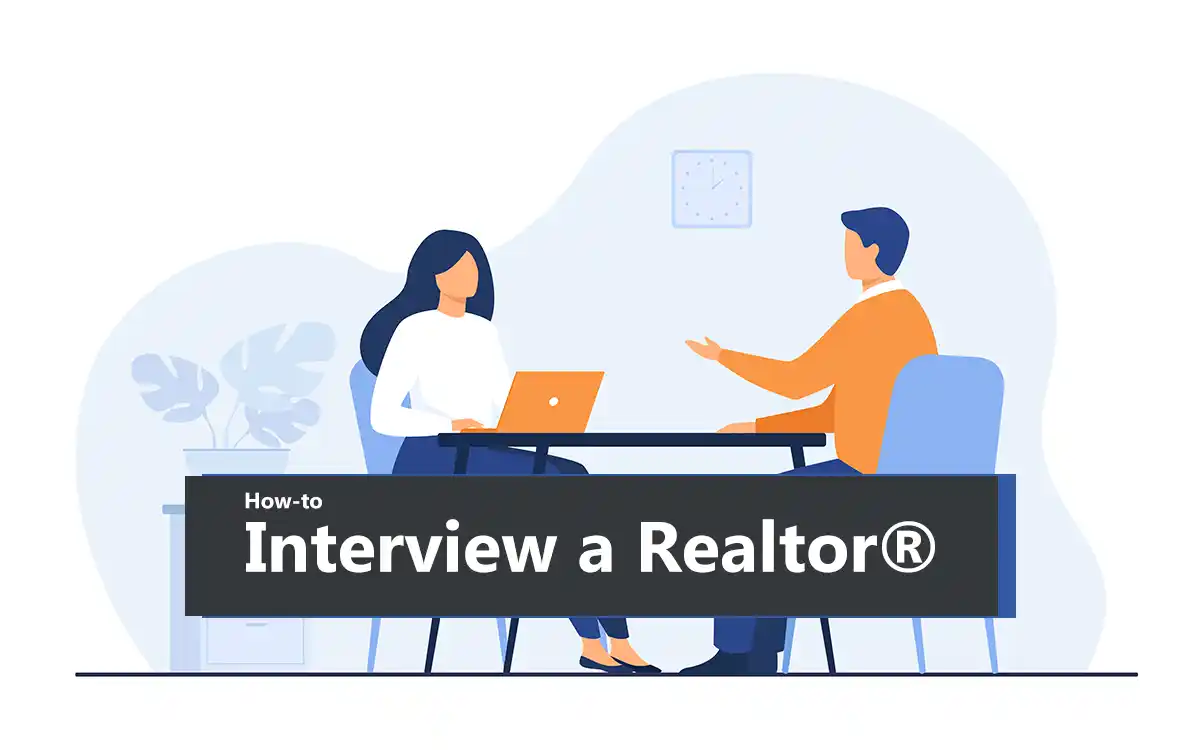
To help you make an informed decision, we have prepared a step-by-step guide on how to conduct an interview for hiring a real estate agent.
Step#1: Prepare for the Interview
Make sure to prepare for the interview prior to meeting the potential agents. For a full step-by-step guide on starting your search, gathering recommendations, and narrowing down your choices, see our detailed guide: How to Find and Choose the Right Real Estate Agent or Realtor.
Steps to Prepare:
Determine your needs: Are you buying, selling, or both? Define your budget, timeline, and desired property type (if purchasing).
Research agents: Search for agents online, read reviews about them, and look at their listings on realtor.ca where applicable. While LinkedIn can show professional background, verify their current licence or registration and brokerage through the appropriate regulator’s official register. Examples include RECO in Ontario, BCFSA in British Columbia, RECA in Alberta, and OACIQ in Quebec.
Compile a list of questions: Focus on their local market knowledge, expertise, and strategies for different projects.
Step#2: Schedule the Interview
Set up an appointment to speak with each agent so that interviews can be conducted in person, over the phone, or through a video call.
Tips for Scheduling:
Allocate at least 30–60 minutes per interview.
Choose a time when you won’t be rushed, so you can ask detailed questions and evaluate the agent properly.
Step#3: Evaluate Their Experience
Experience in the relevant market and property type can help you assess whether the agent is the right person for the job.
Questions to Ask:
How long have you been a licensed real estate agent?
How many transactions did you close last year?
Do you specialize in a specific property type or area?
Could you provide references from past clients who have agreed to be contacted?
Step#4: Assess Their Local Market Knowledge
A strong grasp of the local market is useful, and an agent should be able to demonstrate that knowledge.
Questions to Ask:
What trends are you noticing in this area’s real estate market?
How do you price properties in this neighbourhood?
What is the average time comparable properties stayed on the market here, and for what period?
Are there any specific challenges buyers or sellers face in this area?
Step#5: Discuss Their Marketing Strategy (For Sellers)
If you’re selling your property, the agent’s marketing plan helps you assess how they intend to reach suitable buyers.
Questions to Ask:
How will you market my property?
Will the plan include online listings, open houses, social media, and professional photography?
What platforms do you use for advertising?
Could you provide examples of past marketing campaigns you are authorized to share?
What's your approach to pricing strategy?
Step#6: Explore Their Search and Negotiation Skills (For Buyers)
If you are purchasing, you want an agent who can find suitable properties and negotiate favourable terms for you.
Questions to Ask:
How do you assist buyers in finding suitable properties?
What is your approach to making competitive offers?
Do you have experience negotiating in competitive markets?
How will you keep me informed throughout the process?
Step#7: Understand Their Communication Style
Communication is key in real estate transactions, so it is smart to understand how they will communicate on your behalf.
Questions to Ask:
How often will you update me during the process?
What's your preferred method of communication: calls, emails, or texts?
Do you work alone or as part of a team? If part of a team, who will be my primary contact?
Step#8: Ask About Fees and Contracts
Reviewing the financial and service terms before committing can help avoid future discrepancies.
Questions to Ask:
What does your brokerage propose to charge, and are you open to discussing a different amount or service package?
What services are included in the fee, and who will provide them?
Are there additional fees or applicable sales taxes I should be aware of?
What are the agreement’s duration, termination terms, and any holdover obligations after it expires?
Step#9: Gauge Their Professionalism and Compatibility
Beyond skills and experience, it is important to feel at ease working with the agent and to understand how they conduct themselves professionally.
Things to Evaluate:
Their demeanor: Are they approachable, confident, and professional?
Their listening skills: Do they understand what your needs and priorities are?
Their honesty: Do they set realistic expectations or make exaggerated promises?
Step#10: Verify Their Credentials
Confirm that the agent and brokerage are currently authorized through the regulator for the province or territory where the property is located.
Steps to Verify:
Search for the agent by their full legal name and confirm their current licence or registration status, permitted activities, and brokerage on the official register.
Review any public conditions, restrictions, enforcement, or discipline information the regulator provides. Public registers do not necessarily show every complaint or a complete history.
Do not infer the scope of professional liability insurance or other consumer protection from a status label alone. Consult the regulator’s program information or ask the brokerage for clarification.
Step#11: Request a Sample Portfolio
A portfolio of past transactions can provide insight into the agent’s capabilities when the examples are relevant and authorized for sharing.
What to Look For:
Request anonymized case studies or examples of recent transactions, respecting client privacy.
How do their pricing strategies compare to final sale prices, and what property, market, and list-price factors affected the result?
Client testimonials or references the agent is authorized to share.
Step#12: Compare and Decide
Once you have interviewed a few agents, make a comparison to make an informed decision.
What to Consider:
Their relevant experience and track record.
Compatibility with your personality and goals.
Their fees and value for money.
References from previous clients.
Step#13: Trust Your Instincts
Data and credentials are important, and comfort matters too. Use compatibility as one factor after verifying the objective information and reviewing the proposed terms.
Step#14: Finalize the Agreement
Once you have selected your agent and brokerage, review the contract carefully before signing and make sure the relevant terms are clear.
Points to Review:
Fee and commission structure, applicable taxes, payment triggers, and any seller-funded amount for buyer-brokerage fees. An Ontario commission calculator can help estimate costs, but the signed agreement controls.
Services, scope, representation type, and who will provide the work.
Effective date, expiry date, termination provisions, and any holdover period.
Exclusivity, conflict, and multiple-representation terms that apply in the property’s jurisdiction.
Tip: Learn how to analyze an agent's performance using Sale-to-List Price Ratio and Days on Market metrics in our guide: How to Evaluate a Real Estate Agent. Treat these as context-dependent indicators, not standalone proof of performance.
Final Word:
Interviewing and assessing a real estate agent is a time-consuming task, but it is a worthwhile investment. It can improve the basis for choosing a professional for a transaction that is significant to your financial future. Compare written service proposals, verify the agent and brokerage, and read the agreement carefully before signing.
FA
About the author:
Faiza Ahmed
As the founder of PropertyMesh, Faiza Ahmed is dedicated to making real estate more transparent and cost-effective. While she advocates for more transparent, flexible fee structures so sellers can keep more of their equity, her core focus is empowering buyers and sellers to make informed decisions.
Faiza is a licensed real estate broker registered with the Real Estate Council of Ontario (RECO Registration #4791581) and an active member of the Toronto Regional Real Estate Board (TRREB).